
































































































































































































































































































нет обложки
Verdi: Requiem (1951, stereo)
| Лейбл | Pristine Audio |
| Каталожный № | PACO048 |
| Формат | CD, Стерео ["Accidental stereo" reconstruction]; File, FLAC, MP3, Стерео ["Accidental stereo" reconstruction] |
| Дата выпуска | 2010 |
| Страна | США |
| Жанр | Классика |
| Стиль | Романтизм |
| Штрихкод | 4580484969001 |
Треклист
| Requiem Aeternam | ||
| Kyrie Eleison | ||
| Dies Irae | ||
| Tuba Mirum - Mors Stupebit | ||
| Liber Scriptus - Dies Irae | ||
| Quid Sum Miser | ||
| Rex Tremendae | ||
| Recordare | ||
| Ingemisco | ||
| Confutatis Maledictis - Dies Irae | ||
| Lacrimosa | ||
| Domine Jesu Christe | ||
| Hostias Et Preces | ||
| Sanctus | ||
| Agnus Dei | ||
| Lux Aeterna | ||
| Libera Me - Dies Irae | ||
| Requiem Aeternam | ||
| Libera Me |
Участники
Bass Vocals: Cesare Siepi
Chorus: The Robert Shaw Chorale
Mezzo-soprano Vocals: Fedora Barbieri
Orchestra: NBC Symphony Orchestra
Restoration, Remastered By: Andrew Rose
Soprano Vocals: Herva Nelli
Tenor Vocals: Giuseppe di Stefano
Идентификаторы и матрицы
| Barcode | 4580484969001 |
Примечания
"A normal stereo recording, at it's most simple level, is best made using two microphones carefully placed and directed in order to create the most naturalistic stereophonic effect. The two outputs are recorded onto two tracks or channels which run concurrently – in 1951 this would have meant two tracks on one tape, had the technology been available at the time. Because the two tracks are physically side-by-side on a single tape and read by a single head, any fluctuation in tape speed will not cause a divergence in the juxtaposition of the two channels and the stereo image will remain absolutely stable.
By contrast, this Verdi recording begins with two microphones which have been placed independently of each other. Each was positioned to record the performance, but it's safe to assume both aimed to record the entire ensemble, rather than concentrating on the left or right hand side of the stage. As such we almost certainly don't have what recording engineers term a 'coincident pair'. (Where they were actually positioned is anyone's guess.)
Next we have two independent recording machines, each with its own minute speed fluctuations, something which will be further exacerbated on replay. Without some kind of time-code locking, no two analogue recorders or replay machines will ever stay perfectly synchronised, so our ideal of two channels on one tape and one replay head is also lost.
To add another complication to this already complex picture, one of the two recordings appears to be 'straight', whereas the other has had some kind of 'gain riding' – raising the volume levels of the quieter sections and attenuating the levels of the louder sections.
Finally, and unsurprisingly, both have different tonal characteristics (different microphones and recording equipment) and both have emerged in differing states of disrepair some six decades after the event.
To attempt to deal with all of these issues would have perhaps been an insurmountable task until very recently indeed. The key technologies which have made the present release possible are only recently developed – and though no doubt further advances might at some day in the future make this kind of work simpler, and possibly produce better results, I think the results here are truly something to marvel at and savour. I try to remain modest here – I have been the mere manipulator of tools I could not hope to construct.
Work began on the project in much the same way as I would normally proceed. The recordings were re-pitched to a standard A440 following basic de-clicking. The issues of tonal differences between them become irrelevant during the XR process, as each is re-equalised to a common reference, and then to each other, in order produce as close a tonal match as possible. This is done using high resolution computer analyses of the average frequency responses of each recording across its entirety and using very precise equalisation tools to match the two.
Next comes the tricky part – mixing the two halves into a single 'stereo' track. I used an educated guess as to the relative position of the microphones in order to determine which was left and which was right. Then began the painstaking task of lining the two up. Speed fluctuations on each track meant that synchronisation was forever being lost: the two tracks went in and out of tune with each other, one galloped ahead as the other fell behind, and so on. After hundreds of edits and endless re-pitching and fine-tuning of short sections, often corresponding to a handful of notes or a few short seconds of music, some kind of result was achieved.
The resulting “stereo” mix was rather wild – voices and instruments lurched from one side to another thanks to the gain-riding applied to one track only. An automated procedure to centre the tracks seemed the best solution here, adjusting the two channels simultaneously in volume to balance out the discrepancies between them. This is inevitably a compromise, but it seems to work.
Now began the fine-tuning – thousands of manual corrections to deal with pops, clicks, crackles, slight shifts in synchronisation previously missed and so forth. One particular brass entry, for just two notes, suddenly diverged in pitch – for a moment the glass-like clarity NBC brass section became more like the sound of a drunken Oom-Pah band at the tail-end of a Munich beer festival.
Gradually these flaws were addressed and things began to fall together, and I was able to unleash another new 'secret weapon' – the automatic phase corrector. This analyses the two channels and looks for similarities and phase discrepancies between them, constantly adjusting their relative position in order to further fine-tune synchronisation. (A coarser version of the same would have saved me a huge amount of work, but this operates in the realms of milli- and micro-seconds.) The result is a further marriage of the two halves and a highly integrated stereo image – at least for much of the time.
Now although an 'accidental stereo' recording such as this cannot match an intentional one, it is clear by switching between the two individual mono channels and the stereo hybrid that a massive leap has been made on behalf of the listener. At its best, and this is true for long sections of the recording, the stereo is remarkably convincing and adds hugely to the experience of the listener. At its lesser moments there is some blurring of the picture, some apparent wandering of the image, but although the fine detail of soundstage is lost, the impact rarely diminishes.
One can but hope that the discovery of these two independent recordings of this concert may lead to other similar instances coming to light. In the meantime one can only marvel at the good fortune that such an important concert recording turned out to have a long-hidden partner, ready to be reconstructed into the dramatic and thrilling musical document we present here. My thanks again go out to those who have freely contributed source recordings for this project, who discovered that such a reconstruction was possible, and took the first experimental steps in the realisation of this project."
- Andrew Rose
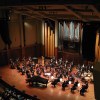
Recorded 27th January, 1951, Carnegie Hall, New York City
"Accidental stereo" reconstruction from NBC and Carnegie Hall recordings
XR remastering by Andrew Rose at Pristine Audio, June-July 2010
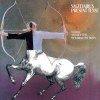
Cover artwork based on a photograph of Toscanini
Другие версии
1958 · Великобритания
2×Винил, LP, Моно [Gatefold ]
1960 · USSR
2×Винил, LP, Моно
1973 · Италия
2×Винил, LP
1975 · Великобритания
2×Винил, LP, Альбом, Моно; Box Set
1982 · Италия
2×Винил, LP, Альбом,...
· Великобритания
2×Винил, LP; Box Set
· Австралия
2×Винил, LP, Моно; Box Set
· Италия
2×Винил, LP, Альбом,...
· Германия
2×Винил, LP, Моно; Box Set
Похожие релизы
Missa Solemnis
Toscanini, Beethoven, Zinka Milanov, Bruna Castagna · 2019
Toscanini Conducts Richard Strauss
Toscanini, Richard Strauss, NBC Symphony Orchestra · 2019
Toscanini Conducts Contemporary...
Toscanini, Prokofiev, Shostakovich, Kabalevsky · 2018
Toscanini Conducts Wagner
Toscanini, Wagner, Helen Traubel, Lauritz Melchior · 2013
Symphony No. 3 In E-Flat, Op.55...
Toscanini, Beethoven · 2008
All-Debussy Concert 19th April, 1936
Toscanini, New York Philharmonic-Symphony Orchestra · 2008
Venice Festival, 3rd September 1949
Toscanini, La Scala Orchestra · 2008
All-Wagner Concert, 6th January,...
Toscanini, Wagner, Symphony Of The Air, NBC Symphony Orchestra · 2007
Toscanini Conducts The NBC...
Toscanini, Wagner, NBC Symphony Orchestra · 2007
Toscanini
Toscanini · 2005
Lohengrin, Götterdämmerung,...
Toscanini, Wagner, Brahms, Philharmonic-Symphony Orchestra Of New York · 2001
Maestro Furioso Vol. 2
Toscanini, Martucci, Respighi, Sibelius · 2000
Данные релиза: Discogs. Раздел «Дискографии» — справочная база винила Видика.