Примечания
CD wallet liner notes:
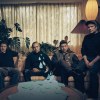
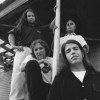
Dayton, Ohio ... In the fall of 1985, in the basement of a largely empty, rented house on Marcella Avenue, The Pleasures Pale came into being. General music chitchat and proclamations of taste between bassist extraordinaire Luis Lerma and fledgling singer/lyricist Jeffrey Bright across the counter at Goldenrod Music, Lerma’s then employer, led to a series of primitive home recording sessions at the Marcella house with guitarist Mitchell Swann and drummer Timothy Payton Earick, childhood friends from the city’s Northridge neighborhood.
America then, especially the Midwest, was mired in recessionary times. Dayton’s once solid industrial foundation had begun to crumble and rust. The information economy, the Internet and even cable television, were years away from changing everything. News was curated, distilled, and disseminated via three monolithic broadcast networks. Radio, national magazines and local newspapers offered more diversity, but predominately the US media landscape of the 1980’s was of limited scope. Politically, a new brand of conservatism had seized power, espousing corporate-friendly trickle-down economics, governmental austerity, and repressive mores. Meanwhile, the specter of nuclear apocalypse remained constant, and a novel, deadly sexually transmitted autoimmune disease had permeated a sense of dread throughout an entire generation of social adventurers. In this atmosphere, prospects for any young person of creative persuasion — or, for that matter, anyone not conforming to a seemingly ever narrowing normal — could appear bleak. Happiness, at the time, appeared to be an increasingly unaffordable proposition, both financially and spiritually, its parameters defined by far off forces deliberating in glass towers.
But in the shuttered factories and silent rails, behind the physical façade of decay, beyond the rampant moral posturing, for those who wanted to see it — or needed to, as a matter of survival — a kind of decrepit-but-liberating poetry was taking root. Popular music was evolving, if slowly but inevitably, away from dinosaur rock toward edgier, less predictable expressions, the way paved by punk and other underground musical and counter-cultural currents. Indie rock was taking form; a fresh horizon, though still largely subterranean, was in view. And The Pleasures Pale was poised to play an influencing, if relatively brief, role.
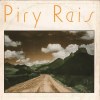
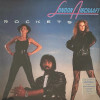
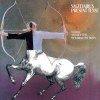
Daily Living Is a Herculean Art existed as an amorphous concept — as a working title given to the band’s booking inquiry cassette. In all, at least three versions existed, including roughly nine songs in total. The alpha incarnation featured four compositions captured in the initial, full-band 4-track sessions and highlighted the essential ingredient at the core of the Pale’s sound: “Be What You Are,” “Lovely Lovely,” “An Upright Spine” and “Whipsaw Children” are built on the undeniable locomotion in the interplay between Lerma’s double-picking bass figures and Swann’s fleet guitar work, drawn with uncanny precision from a range of styles — country, bluegrass and mountain music on one end and sweaty, grinding dance-funk on the other. Propelled by Earick’s kinetic drumming, the songs in these raw recordings — each a familiar staple in the band’s earliest performances — provided bedrock for Bright’s off-kilter crooning, trial-of-the-self lyrical wanderings, and onstage eccentricities. Thematically, Bright wrote and sang a kind of defiantly delicate, suburban blues: Challenging perceptions of 20th Century masculine identity; punching back at conformity and small-mindedness, sometimes slyly, sometimes in reckless affront; championing the sensitive-but-brave and often tragic 1950’s rebel persona embodied by the likes of James Dean and Montgomery Clift; playing on melodrama to humanize the chaos of tumultuous young adulthood; perpetually in pursuit of a redemptive American mythology.
Concurrent to the first sessions, in late 1985, Lerma, Swann and Bright convened a handful of times minus drummer Earick. These acoustic sessions, held in the bare dining room of the Marcella house and aimed more at idea generation than finished product, yielded what may be some of Daily Living’s most surprising elements, as well as some of the trio’s most unusual — and previously unheard — output: “It Could Be Heaven,” “Hideous Monsters,” “Happy Love Ghosts,” “It Haunts Me Now,” and the bonus tracks “Madame More” and “Chaste Tale” are presented here in projected form. That is, all have been finished with varying degrees of additional tracking by Bright between 2017 and 2020.
Notable in these unplugged recordings is Swann’s inventive style on “Hideous Monsters” and Lerma’s acoustic double bass anchoring the eerily sweet “Happy Love Ghosts” and the definitively pale “It Could Be Heaven" (the later studio version of which, released by Heresy Records, did not include bass). “It Haunts Me Now,” as it is here, was used in early performances as an atmospheric, erotically ominous setup for “Happy Love Ghosts,” and “Chaste Tale” would eventually evolve into a fairly rocking live show fixture, employed through the band’s breakup in October 1987. In all, the six sketches show the songwriting trio reaching into diverse, non-rock territories, perhaps exemplified most by the flamenco-inflected, vocally and lyrically audacious (and never performed) “Madame More.”
The initial full-band sessions and these acoustic sessions are, however, only a portion of the DLIAHA tale...
In early 1986, Earick departed to honor a previous commitment. He was quickly replaced by one of Lerma’s prior bandmates, drummer Jeff Keating. A well known figure on the Dayton scene, Keating brought a contrasting style to the band’s expanding repertoire. Compared to Earick’s mod-inspired rave-ups, Keating’s approach was sparse, relatively restrained, and included a taste for swing time. Keato’s contributions were first captured on basement demos of the hypnotically titillating “How I Dreamt of You” (initially titled “Heavenly Dreams He Had”), the Motown-flavored “But She Didn’t,” and “If It Wasn’t So Funny,” an outré, bi-polar farce that began life in early 1986 as a two-minute, new-wave oddity, and is revivified here as an extended, absurdist critique of consumer culture, taking the song’s embryonic germ and extending it to a ter- minal conclusion — all squeezed into a presentation bordering on vaudevillian.
Finally, and perhaps most intriguing, Daily Living additionally includes four tracks further pushing — in four distinct directions — the Pale’s reputation for style-hopping: A single-mic rehearsal take of a very early iteration of “All About Men,” captured shortly after Keating’s arrival, sporting a razor-edged guitar assault from Swann, and fleshed out with supplemental 2020 tracking; a full rendering of “Rhymes in the Old Train Yard,” an instrumental work crafted by Bright and Lerma for a project outside the band that could easily serve as a TPP walk-off theme; “I Just Want You to Love Me,” a slapstick rewording of an early 60’s Presley hit; and lastly, a collaboration between Keating (on organ piped through a Leslie cabinet) and Bright initially given the working title “Worth the World,” here with an extravagant Donovan-esque treatment and rechristened “A Candle in Your Room.”
Taken in sum, Daily Living Is a Herculean Art is a motion study of inception, representative of a rich idea unfurling — and it is, even more so, a vision of that idea projected 35 years into the future. What it is not is a strict archival document in search of nostalgic interest; it is not an effort to simply preserve under glass the early days of The Pleasures Pale. Instead, this collection is intended as an illumination of the unique chemistry and lasting relevance of the art made in a relative blink by Swann, Lerma, Bright, Earick and Keating, some of which was fully expressed in initial efforts, and some of which has only recently been rendered into a more complete statement. The notion is not to rewrite history, or append new meaning, but to breathe life into what had for too long lain dormant and unrealized — to allow the planted seeds to finally flower.
The versions of these “living” songs presented here, whether accurate to their first-captured form or adorned with more recent accompaniment, carry the original spirit of The Pleasures Pale into the 21st Century — as sharply pointed now as then.
Edition of 100.
Данные релиза: Discogs. Раздел «Дискографии» — справочная база винила Видика.