





































































































































































































































нет обложки
Stereobass
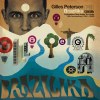
«Stereobass» — издание исполнителя Makar Novikov, Hiske Oosterwijk, выпущенное в 2019 году (Россия) на лейбле Rainy Days Records. Жанр: Джаз, Современный джаз. В издание вошло 10 треков. На странице собраны трек-лист, обложка и характеристики релиза. Ищете «Stereobass» Makar Novikov, Hiske Oosterwijk на виниле? Проверьте наличие и цену в магазине «Видика».
Этого издания сейчас нет в нашем каталоге
Оставьте контакт — проверим возможность привезти его под заказ и напишем вам с ценой и сроком.
| Лейбл | Rainy Days Records |
| Каталожный № | RAINY002CD |
| Формат | CD, Альбом, Стерео |
| Дата выпуска | 2019-04-26 |
| Страна | Россия |
| Жанр | Джаз |
| Стиль | Современный джаз |
| Штрихкод | 0706199653880 |
Треклист
| Yellow Car | ||
| Ûnrêst | ||
| Come to me | ||
| Chanson de l'amour | ||
| Je voudrais te voir rire | ||
| Un Deux Trois | ||
| Je suis comme je suis | ||
| Haute Tension | ||
| Father Time | ||
| Jûnbea |
Видео
Участники
Design: 271dsgn
Double Bass: Дарья Чернакова
Double Bass, Bass Guitar, Cello, Producer: Макар Новиков
Drums, Executive Producer: Alexander Mashin
Engineer: Игорь Бардашев
Engineer: Семён Печёнкин
Executive Producer, Product Manager, Photography By: Eugene Petrushanskiy
Grand Piano, Keyboards: Алексей Иванников
Lead Vocals, Composed By, Lyrics By: Hiske Oosterwijk
Recorded By, Edited By, Mixed By, Mastered By: Alexander Perfilyev
Компании
: CineLab SoundMix
: Major_Studio
: Major_Studio
: Major_Studio
Идентификаторы и матрицы
| Barcode | 0706199653880 |
Примечания
For its second release, Rainy Days Records presents StereoBass, a project completely different in ambiance, orientation and context than the kinetic, modernist hardcore jazz heard on drummer Sasha Mashin’s Outside The Box, which launched the label. As implied by the title, the music revolves around Muscovite bassists Makar Novikov and Daria Chernakova, who pair off to frame the songs and melodies of Dutch vocalist Hiske Oosterwijk with a resourceful array of attacks, timbres, voicings and rhythms, complemented and inspired by pianist Alex Ivannikov’s well-conceived harmonic colors and pithy solos, and Mashin’s creative, authoritatively executed beats. As they did for Mashin’s music on Outside The Box, the protagonists illuminate Oosterwijk’s keenly observed stories and ruminations, delivered in well-turned English, French and Frisian. You could describe it as a Jazz-Alternative-Singer/Songwriter-Art Song hybrid, but the result is really, as Duke Ellington liked to say, beyond category.
The notion of StereoBass gestated around 2014, when trumpeter Alex Sipiagin asked Oosterwijk—his student in the excellent jazz program at the Prins Claus Conservatory in Groningen, Netherlands—to write and sing lyrics for a new project on which Novikov, Mashin and, more often than not, pianist Misha Tsiganov were revisiting and recontextualizing a cohort of his older compositions.
In a recent conversation, Tsiganov recalled Sipiagin telling him about Oosterwijk while on tour “somewhere in Europe.” “Alex told me, ‘She learned one of my songs and sang it,’” says Tsiganov, who emigrated to the United States from St. Petersburg in 1991. “I said, ‘No, that’s impossible.’ Alex’s tunes are extremely difficult; I would never believe someone could sing them.” In a 2016 conversation, Oosterwijk, then 26, acknowledged the challenge of making Sipiagin’s “crazy, sophisticated melodies and harmonies, big jumps, mixed meters and fast lines not sound complicated, but rather like, ‘Oh, there’s the story.’”
Sipiagin opened his laptop and showed Tsiganov a video of Oosterwijk singing the lead on one of his pieces with a group of students. “I couldn’t believe it,” Tsiganov says. “He asked me if he should start a new project playing his music with her. I said, ‘Yes, do it, because she is incredible.’ When we recorded Alex’s first New Path album, she could sing by memory the trumpet part or the saxophone part, no mistakes. In my opinion, she is one of the best singers on the planet.”
Over the course of several tours and three New Path recordings, Oosterwijk developed close friendships with Novikov and Mashin, and also Chernakova, who frequently played with Sipiagin during these years. By the spring of 2017, Oosterwijk recalls, “we were discussing that we only play together when Alex is around—‘Why not play when we want to?’ We enjoy playing together, and we have music that’s ready to be played. At first we were hesitant about having two bass players, but we decided we’d make it work, and arrange the music to take advantage of the possibilities.”
The considerable skill sets of the bassists presented an abundance of possibilities. Novikov brings to any context experience accrued from joining Mashin on hundreds of occasions with such luminaries as James Spaulding, Lew Tabackin, Steve Slagle, Gary Smulyan, and, of course, Sipiagin. “Makar has really solid time, which is rare for Russian culture,” Mashin says. “His quarter notes connect perfectly to my quarter notes.” Tsiganov, a tough critic, encapsulates Novikov’s qualities. “He’s very flexible, creative, melodic and musical,” he says. “He’s a great sight-reader, and he can play mixed meters as easily as standards, straight-ahead music and Latin stuff.”
If you’ve heard the final track of Outside The Box, Chernakova’s Afro-Brazilian inspired composition “Omulu Dance,” you’ve previewed the simpatico that she (left channel) and Novikov (right channel) display as StereoBass proceeds from beginning to end. Herself a graduate of Moscow’s Tchaikovsky Conservatory, Chernakova applies the calibrated touch and flawless bow technique of master classical practitioner to a sensibility informed by the will to swing—or, as Oosterwijk puts it, “to groove and pluck and have the jazz feel.”
Oosterwijk adds: “Makar plays the hell out of his bass, very musical and lyrical at the same time. When they play together, it’s like a dance. They’re not in each other’s way. They’re listening, having conversations and enhancing each other, knowing when to play and when not to play—and how to play. It’s melody, not just a bunch of notes. For me, that’s beautiful to work with.”
“We just tried stuff, working together,” Novikov remarks. “Working together, we tried to complement each other’s strengths. During rehearsals and concerts, we found lines, exchanged ideas, and decided who would play what part.”
Oosterwijk composed the English language songs after the first StereoBass tour, and decided to arrange them for the personnel. She titled “Yellow Car”—which opens both the CD and LP version s of StereoBass—for Novikov’s yellow Soviet-era vehicle “in which I’ve sat many times and even drove once—you’re driving down the road and you have no idea what’s going to happen, but you know it’s ok.” That metaphor of a speculative journey applies throughout this stimulating, adventurous date.
On “Je voudrais de voir rire,” note how the playful, ebullient unison riff and their solo exchanges after Ivannikov’s swinging post-Mehldau declamation complement Oosterwijk’s conviction that “sometimes people in a relationship can be great together, but decide to end it because they’ll be better off without each other—afterwards, when you see each other, you can ignore the other person or just accept it and smile.”
In response to the take-me-or-leave-me message of “Je suis comme je suis,” Novikov states a skronky, funky electric bass line—complemented by Chernakova’s insinuating vamp and Mashin’s ferocious backbeat—and then engages in well-wrought solo exchanges with Ivannikov that signify upon the lyric. Her spare double bass line counterpoints Novikov’s cello groove on “Un, Deux, Trois,” in which Oosterwijk, the second of three children, explores the subject of how to “how to stand out and become your own self if you’re in the middle.” The strings and Ivannikov’s vertiginous piano line represent the siblings, “free birds flying around, doing our own thing, but very close together.”
“Haut Tension” opens with a complementary melange of arco timbres and cymbal splashes (Oosterwijk calls it “the teardrop beat”) before the flow transitions to straight-eighth-land as she brings the lyric—“basically this cry, like, ‘what’s up, are we ok or not?’”—towards its anthemic emotional climax. Chernakova bridges that transition with an emotionally rich arco improvisation.
More pop-centric versions of the French language tunes can be heard on Oosterwijk’s 2016 leader album, EVA (Embrasser, Vivre, Aimer), inspired by her love for the music of Jacques Brel and other French music “when I was younger and more involved in theater.” She continues: “I love the French language—the sounds, its lyrical aspects—but I didn’t want to sing in the traditional chanson way or how other people had already done it. I started to arrange existing chansons in another jacket, so to speak, and then started to compose—that album contains only original compositions.”
A native of the province of Frisia in northwest Netherlands, Oosterwijk researched “how to artistically compose jazz songs for the voice, based on Frisian language and poetry” when studying for her Masters Degree. One result is “Jûnbea,” which scores a night prayer by Frisian poet Gysbert Japicx; Chernakova’s heavenly bow (Oosterwijk composed the part) functions as a tone parallel to the singer. Oosterwijk adds that, to enhance the sounds of the Frisian language, she “used Russian traditional vocal folk melodies as idioimatic material, as inspiration.” On “Ûnrêst” (“restlessness”), she fulfills her aspiration “to use the Frisian language on an artistic level of quality.” Novikov’s pointillistic lines and edgy solo on piccolo bass—supported by Mashin’s nuanced brushwork—complement her portrayal of a “strange, blurry light that you can’t really grasp and you start to feel heavy.”
The track that connects most palpably to the jazz tradition is “Father Time,” Oosterwijk’s regretful account (in English) of her wish to turn back the clock to correct “a mistake in love” that “made him say goodbye.” Composed to fulfill a school assignment to “write sort of a jazz standard,” it has the quality of an undiscovered Great American Songbook gem, not least because of Oosterwijk’s poetic use of reharmonized changes to “Body and Soul” within the flow.
Perhaps Oosterwijk’s path in composing “Father Time”—for a school assignment—is not so dissimilar in intention to Novikov’s usage of his aforementioned well-traveled yellow car—as a means to transport his tools of the trade to the various gigs that fill his calendar. However atavistic the yellow car’s appearance or the “Body and Soul” changes may seem on the surface, both entities serve an attitude animated by fulfilling the needs of the here-and-now. Throughout the date, the musicians eschew the same old-same old, finding fresh ways to address the various flavors in question, eliciting layers of nuance and surprise that reveal themselves with repeated listenings. “Hiske’s music is beautiful,” Novikov says. “I thought it would be interesting to do a project where she could do everything she wanted to do and could do—and she can do a lot of things.”
— Ted Panken
Частые вопросы
В каком году вышло издание «Stereobass» Makar Novikov, Hiske Oosterwijk?
Это издание датируется 2019 годом.
На каком лейбле выпущен «Stereobass» на виниле?
Издание вышло на лейбле Rainy Days Records.
В какой стране издан «Stereobass»?
Страна издания — Россия.
Сколько треков на пластинке «Stereobass»?
В издание вошло 10 треков.
Где купить винил «Stereobass» Makar Novikov, Hiske Oosterwijk?
Пластинку «Stereobass» Makar Novikov, Hiske Oosterwijk ищите в каталоге магазина «Видика»; если её нет в наличии, можно оформить заявку «привезём под заказ».
🔔 ВинилИнформБюро
Не готовы заказывать сейчас? Оставьте e-mail — сообщим, как только это издание появится у нас в продаже.
Похожие релизы
Long Journey
Makar Novikov · 2025
Long Journey
Makar Novikov · 2025
Sing To The World
Benito Gonzalez · 2025
Sing To The World
Benito Gonzalez · 2025
Letters To Theo
Azat Gaifullin · 2024
How Much Of It Is Real
Art Baden, Joe Locke, Jay Anderson, Jeff "Tain" Watts · 2024
Happy Synapse Part One
Sasha Mashin · 2021
Disrespectful
JZ Replacement, Tim Lefebvre · 2020
Disrespectful
JZ Replacement, Tim Lefebvre · 2020
Disrespectful
JZ Replacement, Tim Lefebvre · 2020
The Doors Are Open
Azat Bayazitov · 2020
The Change
Zhenya Strigalev, Federico Dannemann · 2019
Отзывы
Отзывов пока нет. Будьте первым — расскажите об этом издании.
Оставить отзыв
★★★★★
Отзыв появится после проверки модератором.
Данные релиза: Discogs. Раздел «Дискографии» — справочная база винила Видика.